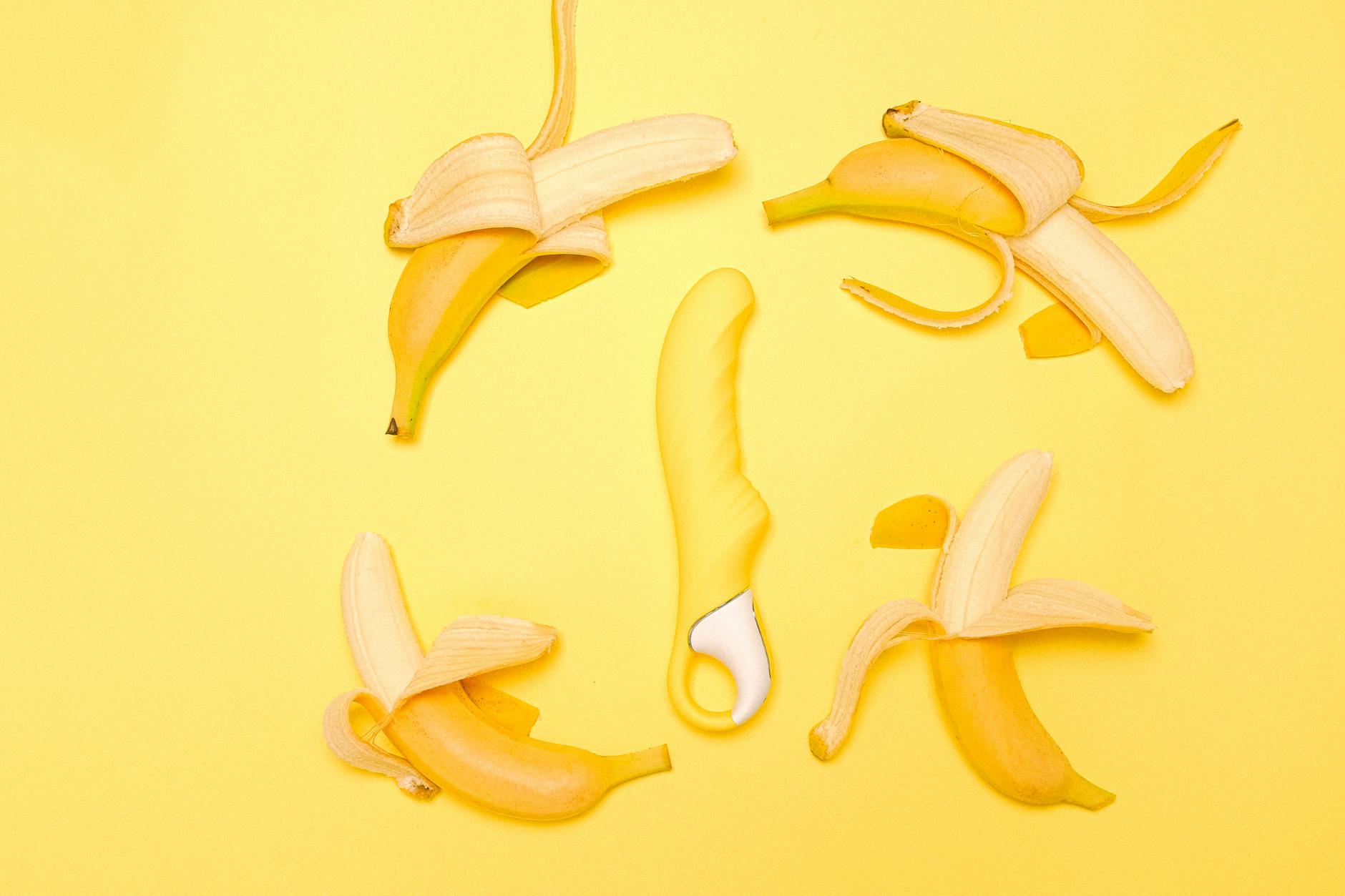
How to Use a Lemon Vibrator for Better Pleasure During Perimenopause
Perimenopause changes how your body responds to touch, but it doesn't diminish pleasure. Learn why lemon clitoral vibrators work especially well during this transition and how to adjust your routine for maximum sensation.
Let's start with the part that nobody warns you about. Perimenopause is not menopause yet, but your body is already shifting. Estrogen and progesterone fluctuate wildly, sometimes within the same week. Your clitoris receives less blood flow. Arousal takes longer to build. And most confusing of all, some days feel totally normal while others feel like someone dimmed the lights on your own pleasure.
Here's what I want you to know: this is temporary, it's common, and your lemon clitoral vibrator is about to become your secret tool for staying connected to sensation.
Perimenopause is the 4-10 year window before your period stops completely. During this time, your ovaries are winding down their hormone production, but they're not consistent about it. Some months estrogen surges. Other months it plummets. This chaos has real consequences for sexual response.
Estrogen keeps vaginal tissue plump and well-supplied with blood. As it drops, tissues thin slightly, sensitivity can shift, and the natural lubrication most people rely on becomes less predictable. Progesterone swings can flatten desire on certain cycle days. And here's the part that surprises most people: you might notice that your most sensitive spots feel different, sometimes duller, sometimes sharper.
But here's what doesn't change. Your capacity for orgasm remains intact. The nerve pathways that create pleasure are still there. Your brain hasn't forgotten how to feel good. What's changing is the calibration, not the destination.
Traditional vibrators typically rely on rapid, direct vibration against sensitive tissue. During perimenopause, that intensity can feel overwhelming some days and underwhelming on others. A lemon vibrator works differently. It uses gentle suction and pulsing instead of pure vibration, which creates a gentler, more cumulative sensation that builds rather than shocks your system.
This matters because perimenopause demands flexibility. On days when your clitoris feels less responsive, the suction action of a lemon clitoral vibrator can coax sensation into being. On days when you're hypersensitive, you can use lower intensity settings without losing the pleasure. The lem vibrator's design means you're not fighting against a one-size-fits-all intensity curve.
Many people I work with report that a lemon sucker feels more like what their body needs during this season of change. It's less jarring, more controllable, and weirdly more intuitive to use across different arousal states.
This is non-negotiable. Before perimenopause, your warm-up might have been 5-10 minutes. Now, budget 15-25 minutes. This isn't failure. This is your body asking for what it actually needs to reach the same place.
Start with foreplay that focuses on areas beyond your genitals. The entire body is an erogenous zone, and during perimenopause, expanding where you're seeking sensation actually increases arousal overall. Touch your neck, inner thighs, breasts, arms. Let arousal build gradually before you introduce your hello nancy lemon vibrator.
When you do bring the vibrator in, start on the lowest setting. Let your body adjust to the sensation. Move it slowly. Many people jump straight to medium or high intensity, especially if they used a traditional vibrator before, and that can actually desensitize tissue rather than sensitize it. Patience is the entire game here.
If your lemon vibrator has multiple intensity levels, you now have permission to use them all. Pattern 1 or 2 on a hello nancy device is not "wimpy." It's calibrated for exactly what perimenopause-era bodies often need. Spend 5-10 minutes at that level. Notice what happens.
Then, if you want, move to pattern 3. Then maybe 4. The goal is not to speed-run to climax. The goal is to stay curious about what your body is capable of today. Some days you'll peak at pattern 2. Other days you'll want more. Both are completely normal.
Here's a strategy that works: rotate through 2-3 patterns over the course of a session. Spend a few minutes on each. This gives your body time to acclimate and builds arousal through variety rather than through sheer power. Your nervous system will actually thank you for the rhythm.
You might be producing less natural lubrication during perimenopause, even on days when you're very aroused. This is frustrating and absolutely common. A good water-based lubricant is not a sign of something being wrong. It's a tool.
Apply it directly to the tip of your lemon vibrator or to the area where you'll be using it. Reapply as needed. The suction action of a clitoral vibrator works better with a light layer of lube anyway, because it reduces friction and increases the sensation of the suction itself.
Skip silicone-based lubes if you're using a silicone vibrator, since they can degrade the toy over time. Stick with water-based. And please don't skip this step because you feel like you "should" produce enough on your own. Your body is changing. Adaptation is not weakness.
If you're in a relationship, your partner might notice that you're taking longer to orgasm, that your arousal pattern feels different, or that you're less spontaneously interested in sex. These observations, without context, can feel like rejection or loss of desire. They're not.
Have this conversation outside the bedroom. Say something like: "My body is going through perimenopause, which changes how I respond to touch. I'm learning what works for me now, and I want you to be part of that. It doesn't mean I want you less. It means my body is asking for something different." Then, bring your partner into that discovery.
Using a lemon vibrator with a partner can be part of foreplay or the main event. The suction sensation is so different from what most people are used to that it can feel fresh and interesting, even in long-term relationships. Your adaptation is an opportunity, not a setback.
If you experience pain, sharp discomfort, or significant dryness that doesn't improve with lubrication, talk to a gynecologist or menopause specialist. Genitourinary syndrome of menopause (GSM) is real and treatable, often with topical estrogen creams or other options. You don't need to white-knuckle through this.
If your desire has completely tanked and you're not experiencing any arousal at all, that can sometimes be a sign of dropping testosterone or other hormonal shifts worth discussing. Similarly, if you're experiencing depression, anxiety, or rage, mention it to your doctor. These are common during perimenopause and often very treatable.
The goal is not to suffer through this phase. The goal is to adapt intelligently and stay connected to pleasure.
Perimenopause is disorienting because your body is speaking a dialect of pleasure you haven't learned yet. The pathways are the same. The destination is the same. But the route has changed, the pace is different, and the views along the way feel unfamiliar.
A lemon clitoral vibrator isn't a solution to perimenopause. It's a tool for pleasure during perimenopause. And like any tool, you'll get better at using it the more you experiment. So give yourself permission to be clumsy at first. To try patterns you don't think will work. To spend 20 minutes on foreplay when you expected to spend 5.
Your body in perimenopause is not broken. It's evolving. And evolution is actually just another word for possibility.
Yes, absolutely. Lemon vibrators are safe for all bodies in all phases of the menstrual cycle and beyond. The gentle suction action is actually well-suited to perimenopause because it's less jarring than traditional vibrators. Start at a lower intensity, use plenty of lube, and listen to your body's signals. If you experience pain or discomfort, stop and consult a healthcare provider.
There's no "should." Some people use a lem vibrator several times a week. Others use it occasionally. Frequency doesn't determine pleasure or health. What matters is intention. If you're using it as part of self-care and staying connected to your body, that's the right frequency for you. If you're not interested, that's also fine.
Not directly. If your desire has dropped due to hormonal shifts, a vibrator alone won't fix that. But it can remind your body what pleasure feels like. It can help you reconnect with sensation. And sometimes that reconnection sparks desire back to life. If desire is completely absent and not returning after a few weeks, check in with a doctor.
A lemon sucker uses suction and pulsing rather than pure vibration. This creates a cumulative, drawing sensation rather than a buzzing one. For many people during perimenopause, this feels gentler and more controllable. You can also adjust intensity more gradually, which helps with the unpredictable arousal shifts that come with hormonal changes.
If you want to, yes. Using a hello nancy device with a partner can be part of foreplay or penetrative sex or the main event itself. Some couples find that exploring together helps both people understand the body changes that are happening. It can actually deepen intimacy during a transition that can otherwise feel isolating.
That's worth exploring. Sometimes it means you need more warm-up time. Sometimes it means you need a different pattern. Sometimes it means your hormones are at a low point that day. But sometimes it also means your body needs something different, and that's okay. You might benefit from talking to a healthcare provider about hormone levels or exploring other tools alongside your vibrator.
Perimenopause is a curveball, but it's not a stopping point. Thousands of people navigate this transition and come out the other side with a deeper understanding of their own pleasure. A lemon vibrator isn't the answer to everything, but it's a genuinely useful tool for this specific moment in your body's story.
Your pleasure matters during perimenopause just as much as it did before. Your body deserves attention and experimentation and patience. And you deserve to know that this phase, as strange as it feels right now, is actually temporary. On the other side is clarity and often, pleasantly, a new chapter of sensation.
Ready to explore? Start with the basics. Give yourself 15-25 minutes. Use a lemon clitoral vibrator on its lowest setting. Be curious. And remember that what works today might feel different tomorrow, and that's exactly how it's supposed to work right now.