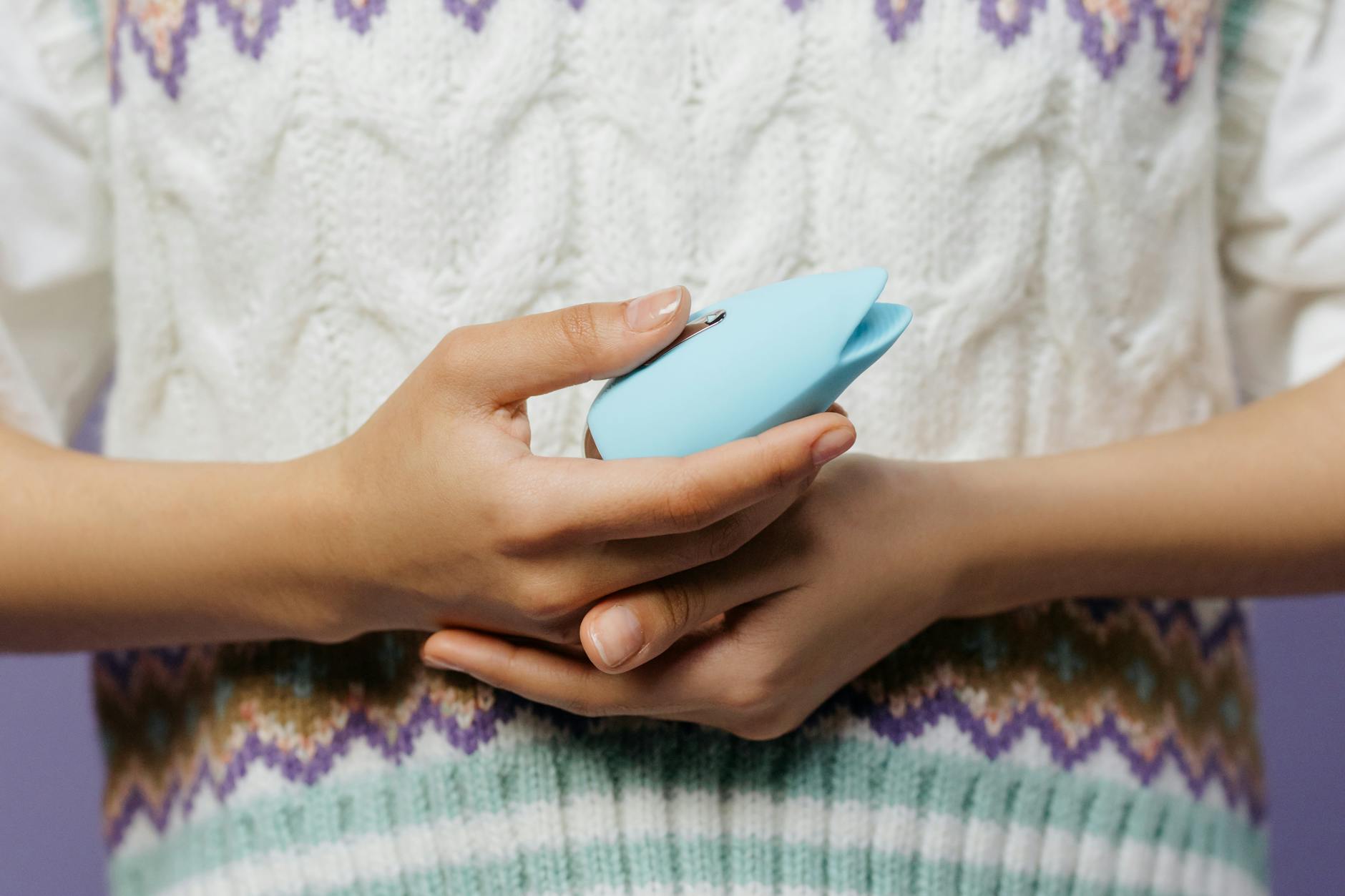
How to Use a Lemon Vibrator When Rebuilding Desire After Breakup
When a relationship ends, your body goes into lockdown. Here's how a lemon clitoral vibrator helps you reconnect with pleasure again, and why that matters more than you think.
Let's be real. After a breakup, your body doesn't just feel sad. It shuts down.
Desire vanishes. Touch feels foreign. The thought of pleasure, let alone pursuing it, can feel disloyal, confusing, or just impossible. You're grieving. Your nervous system is in lockdown. And somewhere in the back of your mind, you're wondering if you'll ever want sex again, or if that part of you just permanently switched off.
It doesn't. But rebuilding it takes intention, patience, and tools that let you reconnect without performance pressure or emotional weight. That's where a lemon clitoral vibrator like the Lem comes in. Not because orgasms fix heartbreak. They don't. But because your body deserves to know it's still alive, still capable, and still yours.
Your desire didn't disappear because you're broken. It disappeared because your brain did exactly what it's supposed to do: it downregulated arousal in response to loss and stress.
When a relationship ends, several things happen at once. Cortisol (your stress hormone) spikes. Dopamine drops. The neural pathways associated with pleasure and reward get suppressed because your body is in survival mode, not thriving mode. If the breakup involved betrayal, rejection, or unresolved conflict, your system is also processing grief and sometimes shame or anger. Desire requires safety, and right now, your nervous system doesn't feel safe.
This is neurologically sound and completely normal. It's also temporary.
The mistake most people make is waiting to feel ready before they try anything. You won't feel ready. Healing happens in reverse sometimes. You start by moving your body, and then your mind catches up. You start by allowing small sensations, and then desire rebuilds.
Before you pick up any vibrator, understand what you're actually trying to do. You're not trying to feel sexy for someone else. You're not trying to prove you're over it. You're trying to remind your body that pleasure is still available to you, that you're still capable of it, and that this body is still yours to enjoy.
That's a radically different goal than climax.
Most breakup recovery happens in the gap between what you lost and what's still yours. A lemon clitoral vibrator is a tool to close that gap. It's a way to say, "My pleasure doesn't depend on this relationship. It doesn't depend on someone else's timing or validation. It's mine."
For a lot of people, especially those who lost themselves a bit in the relationship, that's the most healing part.
There's no fixed timeline. I've worked with clients who needed two weeks of space, and others who needed two months. The signal isn't a calendar. It's a shift in your nervous system.
You're ready when:
You're sleeping better (or at least consistently)
You can go an hour without the thought pattern spiraling
You feel a tiny spark of curiosity about something, anything
You're not actively angry or in acute shock
You're willing to do this for yourself, not to prove anything
If you're still in active crisis mode, wait. Numbness is different from readiness. If you're feeling genuinely numb, moving your body in other ways first (walking, stretching, dancing) can help wake up your nervous system before you add erotic touch.
Start low. Not just on intensity, but on expectation.
The first time, don't aim for an orgasm. The goal is sensation. Lie down somewhere safe and private. No phone. No outside noise if you can help it. Spend five minutes just noticing your breath. That sounds fake until you do it. Most people post-breakup are holding tension they don't even register.
Start the Lem on the lowest setting. The suction-based clitoral vibrators like Shop Lem Official's design are gentler than traditional vibrators, which matters when your nervous system is fragile. Press it against your clitoral area and don't move. Just let the sensation exist for a minute or two.
Notice what comes up. Not judgment. Just observation. Some people feel relief. Some feel nothing. Some cry. All of that is fine.
If nothing feels right, stop. Come back tomorrow or next week. You're building trust with your body again, and trust can't be rushed.
Over a few sessions, you can gradually spend more time with the vibrator, increase the intensity a notch or two, and explore what actually feels good right now (which might be totally different from what felt good before). Your body has changed. Your preferences might have too. That's information, not regression.
Here's what surprised most of my clients: using a lemon clitoral vibrator alone after a breakup often became an unexpected turning point. Not because of the physical sensation, though that mattered. But because of the psychological reclamation.
For a lot of people, especially those in long-term relationships, pleasure became entangled with someone else's presence, someone else's approval, someone else's timing. You learned to read their breathing. You learned to climax on their schedule. Your desire became a duet.
When you use a vibrator alone, you remember you have a solo part. You remember your pleasure doesn't need an audience. You remember that your body can create sensation without collaboration.
That's not just nice. In the context of breakup recovery, it's essential. It's the foundation for eventually dating again, if that's something you want. Because healthy sexual connection requires being able to access your own pleasure independently, then share it. Not the other way around.
Guilt is the big one. If the relationship ended messily, you might feel like pleasure is disloyal to the grief, or like it means you're "over it" faster than you should be. That's the breakup version of all-or-nothing thinking. You can grieve and also gently reconnect with your body. One doesn't erase the other.
If you're feeling guilt, try naming it first. "I feel guilty for feeling pleasure." Then counter it with simple logic: "Pleasure isn't betrayal. My body deserves to feel good. That doesn't mean I didn't care about the relationship." Some people need to say that out loud. Some need to write it down. Do whatever feels less ridiculous to you.
Second block: numbness. If you're not feeling anything when you use the vibrator, that's often not a signal to give up. That's a signal to slow down more. Try using the Lem without the vibration first. Just the physical contact. Spend longer on warm-up. Sometimes pleasure takes three sessions to wake up, not one.
Third block: shame or "wrongness." Some people were raised with the message that solo play is selfish or sinful. If that's in your background, this is your chance to update that belief. Your pleasure is not wrong. It's not selfish. It's self-care in its most literal form.
The timeline between "comfortable with my vibrator" and "ready to date or have partnered sex again" varies wildly. For some people it's weeks. For others, months. There's no rush.
What matters is that when you do date again, you're coming from a place of "I know what my body likes, I know I can generate pleasure independently, I'm choosing to share this with someone" instead of "I'm broken and need someone else to fix this."
That shift is invisible to the other person, but it changes everything about the experience. You'll have boundaries more easily. You'll ask for what you want. You'll know the difference between sex you want and sex you're doing to feel connected or valuable. That clarity is what separates healthy sexual recovery from just trading one problem for another.
If you try using a lemon clitoral vibrator and it doesn't feel good, or if you have a day where desire vanishes again, that's not failure. That's the nonlinear reality of grief and recovery.
Your nervous system will have good days and harder days. Some sessions with the Lem will feel amazing. Others will feel like nothing. Both are normal. The goal isn't to feel sexy all the time now. The goal is to rebuild the capacity for pleasure, which includes building tolerance for the fact that pleasure isn't always accessible, and that's okay.
If you find yourself struggling significantly or feeling stuck beyond a few months, talking to a therapist or counselor trained in sexual health and breakup recovery can help. There's no shame in that. Sometimes the biggest block is something deeper than the breakup itself, and professional support helps clarify what that is.
For now, know that your desire isn't gone. It's just dormant. And tools like a lemon vibrator are how you gently, safely, compassionately wake it back up.
There's no magic number. Wait until you're past the acute shock phase, sleeping somewhat regularly, and curious rather than numb. For some people that's two weeks. For others, two months. Listen to your nervous system, not a timeline.
Not faster, but more healthily. Reconnecting with your own pleasure helps you remember you're a complete person. That doesn't speed up grief, but it does help prevent you from mistaking missing someone with needing someone.
Completely normal. Especially if you're in early grief or your nervous system is still in lockdown. Numbness is your body's protective response. Give it time. Start with lower intensity and longer warm-up periods. The sensation will come back.
Yes, and I'd encourage it. Using a vibrator is a way to practice self-care and bodily autonomy. You're not doing anything wrong. If shame comes up, that's often internalized messaging that benefits from gentle interrogation. Your pleasure matters. You matter.
Not a reason to put your body on hold. Reconnecting with your own pleasure doesn't mean you've closed the door on reconciliation. It means you're caring for yourself while you figure out what you want. That's healthy either way.
No obligation to disclose your solo play history. If you choose to share it with a future partner, that's your call. But your private healing process is exactly that. Private. You're welcome to keep it to yourself.
Heartbreak rewires your nervous system. The pain is real, and so is the numbness that follows. But numbness doesn't last forever. Reconnecting with pleasure, starting with yourself and a tool like a lemon vibrator, is how you remind yourself that healing doesn't just mean getting over someone. It means getting back to yourself. If you're struggling with the emotional side of this process, reaching out for professional support can help you navigate it with more clarity and compassion.