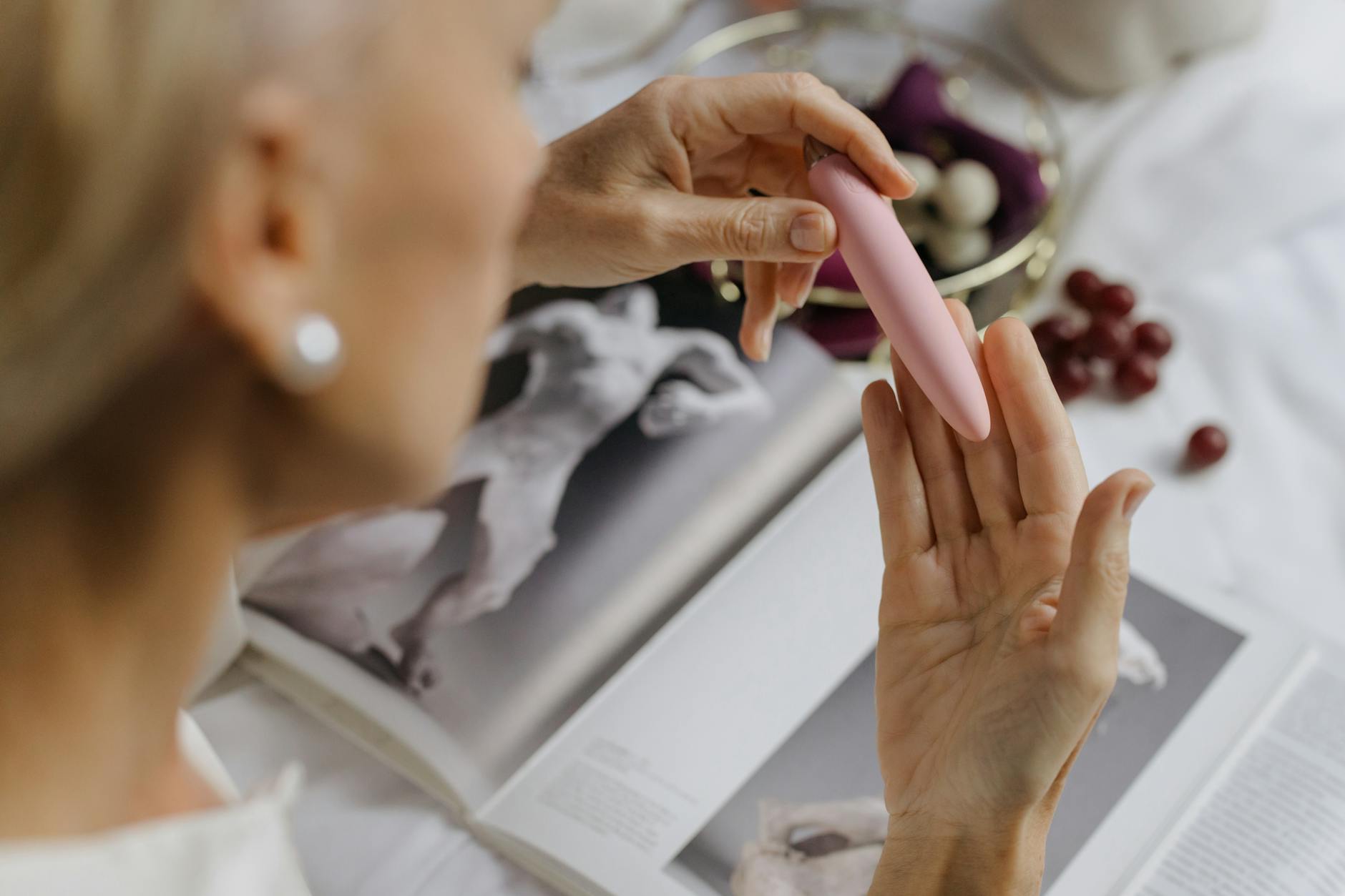
How to Use a Lemon Vibrator When You're Single After a Long-Term Relationship
After years of partnered sex, solo pleasure feels awkward at first. A lemon clitoral vibrator can bridge that gap and help you reconnect with what turns you on independently.
After a long-term relationship ends, solo sex feels weird. Not because you've forgotten how to touch yourself, but because the context has shifted. For years, pleasure was a duet. Now it's a solo performance, and your brain hasn't quite caught up to that transition yet.
When you've spent years (or decades) having sex with someone else, your arousal pathway becomes intertwined with theirs. You learned what works because of their response, their timing, their preferences. Your own desire became partially dependent on someone else's presence.
Now that person isn't there. So your nervous system has to relearn something it should theoretically know: how to get turned on for yourself, by yourself, without external validation.
This isn't a failure of desire. It's a recalibration.
The physical part of solo sex after a long-term relationship often feels too quiet. You might notice you're not as aroused as you used to be with a partner, or that it takes longer to build momentum. This happens because you're missing the external stimulation, the presence, the dynamic back-and-forth that used to amplify your arousal.
That's where a lemon clitoral vibrator comes in. It's not cheating on the rediscovery process. It's scaffolding.
A lemon sucker like the clitoral vibrator from Shop Lem Official uses air-pulse suction rather than traditional vibration. This changes the experience in ways that matter for solo play after a breakup.
First, suction creates a sensation that's noticeably different from your hand or a partner's touch. Different enough to reset the neural pathway. Your brain isn't comparing it to years of partnered sex because it's unfamiliar territory.
Second, the lemon vibrator requires less active participation from you. You don't have to maintain pressure or rhythm. You set it and let it work. This matters because when you're rebuilding solo pleasure, decision fatigue is real. Every choice about pressure, speed, angle, when to move, when to pause, all of it suddenly lands on you. The lemon removes some of those micro-decisions and lets you focus on sensation instead.
Third, air-pulse stimulation tends to feel more diffuse than direct vibration. It's less intense on entry, which means you can ease back into solo pleasure without feeling like you're white-knuckling toward an orgasm. That matters when your nervous system is still processing the loss of the relationship.
The physical setup matters more than you'd think when you're rediscovering solo pleasure.
Find a space where you feel genuinely alone. Not just alone by yourself, but genuinely private. If you're living with roommates, friends, or family while you rebuild post-breakup, this might mean waiting for an empty house or booking a hotel night (honestly, treat yourself). Your nervous system needs to know you're safe and unobserved before it will relax into pleasure.
Set a time when you're not rushed. The first few times using a lemon vibrator solo, budget thirty minutes, not five. Your arousal is learning a new pattern. It needs space to unfold without pressure.
Have lube on hand. Even if you've never needed it before, your vulva might respond differently now. This isn't weakness. It's just a change in context. Water-based lube works best with the lemon vibrator and makes the suction feel richer.
Honestly though, start at the lowest setting. You might be used to penetration or firm pressure from a partner, but lemon vibrators hit differently. The lowest settings often feel surprisingly strong once you're focused entirely on the sensation.
Begin by placing the lemon against your labia without activating suction. Get a feel for the shape, the weight, the texture. This sounds obvious, but after years of partnered sex, your body might be used to jumping straight to high intensity. Solo, you get to explore slow entry.
Once you activate the lowest setting, stay there for at least five minutes. This isn't about chasing an orgasm. It's about letting your nervous system register the sensation, adjust, and then gradually feel more pleasure as you acclimate.
Move around. The lemon vibrator works well on direct clitoral stimulation, but it also feels good slightly off to the side, on the clitoral hood, on the labia. Explore. You're learning your own body in a new way, and there's no rush.
As your arousal builds, you might increase the setting. You also might not. Some people who rebuild solo pleasure after long-term relationships find their sweet spot is lower intensity than they expected. That's valid. Your pleasure doesn't need to look like anyone else's.
Most importantly: if you don't orgasm, that's fine. Sometimes the first few times aren't about the destination. They're about remembering that your body can feel good without someone else directing it.
Using a lemon vibrator solo after a breakup isn't just a physical practice. It's also an emotional one.
You might feel guilty. You might feel like this is a consolation prize compared to partnered sex. You might feel lonely using it. All of these feelings are completely ordinary, and they don't mean you're doing anything wrong.
There's also something quietly powerful about rediscovering that you can pleasure yourself, independently, without needing someone else's involvement or approval. That's not shallow. That's actually foundational to rebuilding after a breakup.
Some of my clients describe this period as the first time they've truly owned their own desire. Not desire that's responsive to a partner, not desire that's performed for someone else, but desire that belongs entirely to them. A lemon vibrator is just a tool in that reclamation.
There's no perfect schedule. Some people find that solo pleasure once or twice a week helps them feel more embodied and grounded. Others do it daily for a while, then taper back. Listen to your own rhythm.
What you might notice: your confidence around your own body probably increases over time. The awkwardness fades. You stop comparing solo pleasure to partnered sex because they're genuinely different experiences, and both have value.
You might also notice that solo pleasure becomes easier as you process the breakup itself. The first months are often awkward because you're still in grief. As time passes and you heal, arousal usually returns more naturally.
If three or four months pass and you're still struggling with arousal even solo, that might be worth checking in with a therapist or doctor. Sometimes low desire after a breakup is situational grief (totally normal). Sometimes it's something else. Either way, you deserve support.
One last thing: learning to pleasure yourself solo isn't the opposite of partnered pleasure. It's actually the foundation for better partnered pleasure.
When you know what turns you on independently, you can communicate that to a future partner much more clearly. You're not relying on them to figure out your body from scratch. You know the map.
You can also enjoy solo pleasure alongside partnered pleasure. They're not mutually exclusive. Some people use a lemon vibrator occasionally even when partnered because it's a different sensation, it's entirely their own, and it feels good. That's not infidelity. That's integration.
Right now, though, you're not thinking about future partners. You're rebuilding a relationship with your own desire. A lemon vibrator is a tool for that, nothing more, nothing less. Use it without guilt, without performance, without pressure. Your pleasure matters, and it belongs to you.
Completely. After years of partnered sex, your nervous system is wired for that dynamic. Solo pleasure feels foreign at first because you're missing the external feedback loop. This isn't a sign that something's wrong with you. It's a sign that your body and brain need time to adjust to a new context. Most people find that awkwardness fades within a few weeks of consistent solo play. Be patient with yourself.
There's no fixed timeline, but most of my clients report that by four to six weeks of regular solo exploration, the awkwardness has softened significantly. That said, emotional grief from the relationship itself might still be present, and that can dampen arousal regardless of how comfortable you are with the act. Both are normal. Pleasure often returns as the grief lessens.
Often, yes. The key is managing expectations. The lemon vibrator isn't a magic solution, but it does provide external stimulus that can help your nervous system relax into arousal. If you're struggling to orgasm, focus first on whether you're in a psychologically safe, pressure-free environment. The vibrator helps most when you're not white-knuckling toward climax. It's a tool for sensation, not a guarantee of outcome.
No. Self-pleasure is a form of self-care, not a sign of being stuck. In fact, many people find that reconnecting with solo pleasure helps them move through grief more fully. It's grounding. It reminds you that your body is still capable of feeling good, independently of the relationship that ended. That's actually part of healing, not a barrier to it.
That's entirely up to you. Some people prefer to keep solo pleasure private. Others find it helpful to mention it early in a new relationship so there's transparency. Neither choice is wrong. The only non-negotiable thing is that your own pleasure belongs to you, whether or not you share that with someone else.
Low desire after a breakup can be part of grief, depression, hormonal changes, or a combination. If it's persisting beyond a few months, check in with a therapist or your doctor. There's no shame in getting support. Sometimes what feels like a pleasure issue is actually a bigger mental health transition that deserves professional guidance.
Your pleasure matters. Not eventually, not when you're partnered again, not when you've fully healed from the breakup. Right now. You deserve to feel good in your own body, on your own terms. A lemon vibrator is just a tool. The real work is reclaiming the belief that your pleasure is worth your time and attention. Start there.