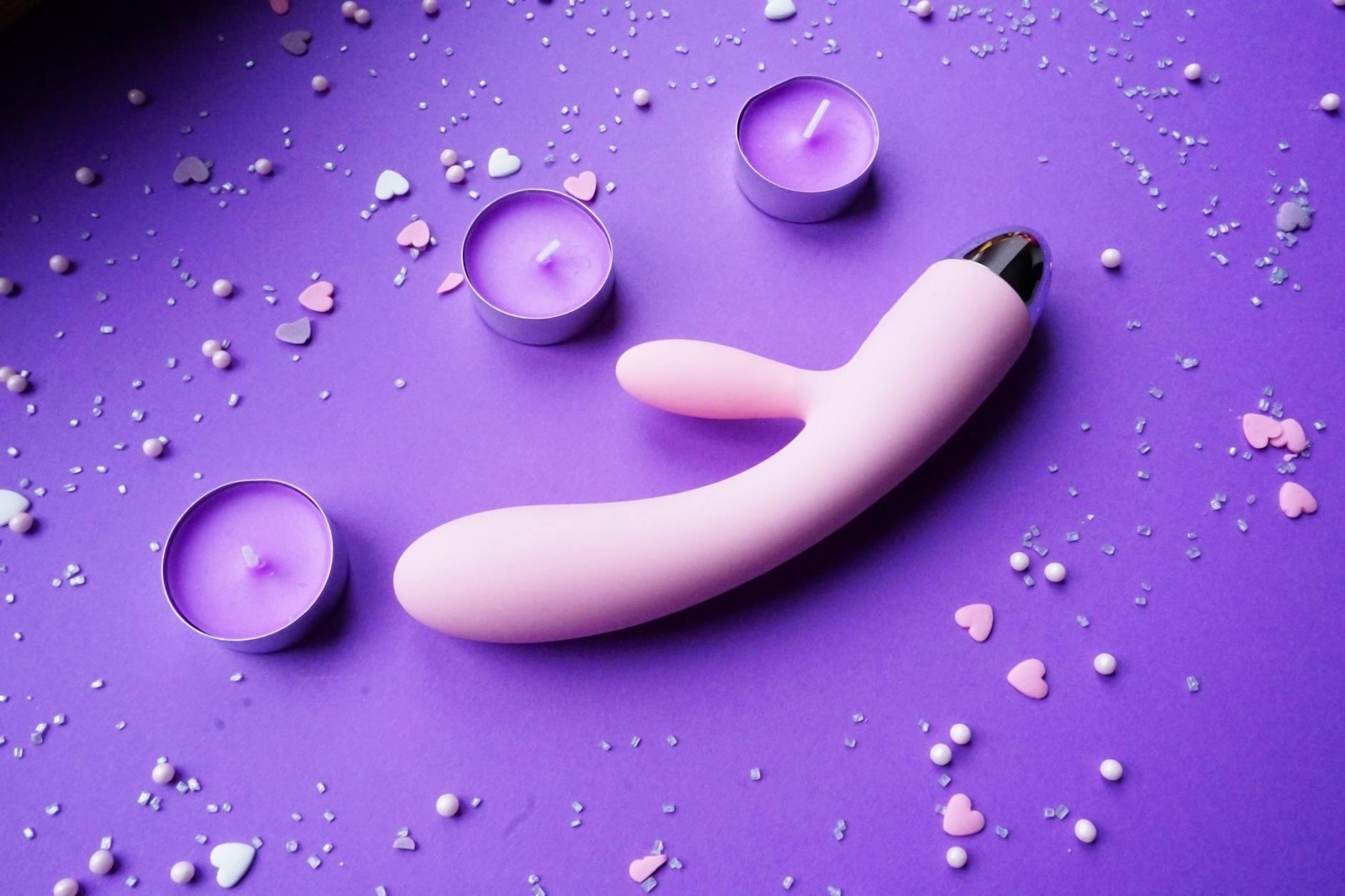
The conversation that feels risky but actually deepens connection. A couples therapist on timing, language, and why a lemon clitoral vibrator often becomes the bridge partners didn't know they needed.
Here's the thing. When someone wants to introduce a lemon vibrator to their partner, the actual problem isn't the toy. It's that they're trying to say "I want more pleasure" or "I want us to explore together" but they're terrified it lands as "You're not enough" or "I'm bored."
The partner hears threat. The person with the vibrator hears rejection. The conversation collapses. The toy stays in a drawer.
After nearly two decades of working with couples, I've learned that the best introductions happen when you separate the desire (which is about you and your pleasure) from the meaning (which should be about the two of you and your connection). That distinction changes everything.
This sounds clinical, but it matters. Sit with your own answer to these questions first, before you ever bring it up.
Why do you want a lemon vibrator? Is it because clitoral stimulation works better for you than penetration alone? Because you want to explore a sensation you've never tried? Because you want the two of you to be present together while you experience pleasure? Because something changed physiologically and you need different kinds of touch?
Each answer points to a different conversation.
If you're adding a vibrator because your partner isn't attentive, that's not a toy problem. That's a partnership problem that a toy will actually make worse. Work on that first.
If you're adding a vibrator because your body changed (age, medication, post-pregnancy recovery) and you want to feel good again, that's a completely different ask. You're not asking for more from them. You're asking to reclaim something for yourself, and inviting them along.
Timing first. Not during sex. Not during conflict. Not when either of you is tired or distracted. Ideally, you're somewhere neutral, clothes on, before intimacy has started.
Here's what I teach couples.
Start with appreciation. Genuinely. "I love how we connect. And I've been thinking about something I want to explore together."
Then the specifics. "I read about lemon vibrators. They use suction instead of vibration, and the way they work is really different. I'm curious to try one." You're giving information without loading it with meaning yet.
Then the invitation. "I'd want to explore it with you. Not instead of what we do. Alongside it. Would you be open to that?"
Notice what's absent. You're not saying "I need this because you don't satisfy me." You're not saying "Most women orgasm this way so obviously you should want this too." You're not apologizing for your own pleasure.
Resistance often shows up as a joke. "So I'm not enough anymore?" They'll deflect with humor because the real feeling (vulnerability, maybe inadequacy) is too big to sit with.
Your job is not to laugh it off or reassure them aggressively. Your job is to name what's actually happening. "I get that this might feel threatening. It's not. Here's what I actually want." Then say it again, plainly.
Sometimes the resistance is real hesitation. "I don't know how we'd use it." "What if I feel weird?" "I'm not sure I want someone else's product in our bed."
These are fair. Answer them specifically. "We'd probably start with just me exploring it while you watch. Or you could explore it on me. We'd go slow. And actually, a lemon clitoral vibrator isn't someone else's thing. It's a tool I own, like a toothbrush."
This is where theory becomes practice. The first time matters because it sets the tone for whether this becomes a shared experience or something that happens in separate corners of the bedroom.
Start slow. During foreplay, introduce it casually. "I want to show you something." Let them see it. Let them hold it. Demystify it. A lemon sucker vibrator looks a bit like a fancy makeup tool if you're not thinking too hard about it. That's fine.
You might use it on yourself while they're present. You might ask them to use it on you. Both are valid. What matters is that it's not a surprise or a performance. It's an addition to something you're already doing together.
Most couples I work with find that the first use is awkward. That's normal. Awkwardness means you're trying something new. By the third or fourth time, it becomes part of your rhythm.
Some partners end up loving the lemon vibrator as much as you do because they get to watch you experience more pleasure, and that itself becomes exciting. That's the sweetest version of this story, and it happens more often than you'd think.
Here's what changes when a couple makes this work. The conversation you have to have in order to introduce a toy is the same conversation you need to have about desire, pleasure, bodies changing, and what you each want.
Most couples never have that conversation cleanly. They have it sideways through resentment, or they don't have it at all. A vibrator sometimes gives you permission to start.
Once you've said "My body wants this" and your partner has heard it and said yes, something shifts. You've both acknowledged that your pleasure matters. You've both gotten curious instead of defensive. You've both opted in to the same experience.
That's not about the toy. That's about partnership.
Listen to why. If it's about the object itself (they have a genuine discomfort with toys for religious or personal reasons), that's information you can work with. You might decide to explore alone. You might find a compromise that feels good for both of you.
If the no is actually "I don't want you to feel pleasure without me" or "I'm threatened by your independence," that's a different problem. That's about control, not about toys. A relationship where your pleasure is conditional on it serving your partner's needs isn't a healthy one. I've worked with countless people in that situation, and the toy isn't the issue.
There's something about the lemon clitoral vibrator that invites exploration rather than performance. The suction technology is so different from traditional vibration that it reads less as "entertainment" and more as "a different kind of touch."
That reframe matters psychologically. If you're trying a lemon sucker, you're both learning something new together. Nobody's the expert. Nobody's being compared to previous partners. You're just curious people in a bed figuring out what feels good.
For people with partners who are hesitant about any toys, I've noticed the lemon vibrator is the one that converts skeptics. It's because the sensation is so unusual that it genuinely becomes about shared discovery.
One conversation isn't enough. You need to check in.
A week later. "I liked when we..." or "I felt nervous about..." Just a quick reflection. Not a major therapy session. Just continuity.
And importantly, keep exploring. Don't let the lemon vibrator become the only thing you're curious about. Try new positions. Try different times of day. Bring back some of the things that worked early in your relationship. The toy isn't a fix. It's an addition to an ongoing conversation about what the two of you want.
The couples who make this work aren't the ones with the best communication overnight. They're the ones who decided to keep trying.
Completely normal. Your brain is wired to link pleasure with partnership, so when pleasure gets augmented by a tool, it can feel like you're being replaced. You're not. Talk about it. Tell your partner exactly what you're worried about. Most of the time, they're not thinking about you at all. They're thinking about how their body feels. That's actually not rejection. That's presence.
Yes. Many couples use a lemon vibrator during penetration because it adds stimulation that penetration alone doesn't always provide. Some positions work better than others. The reality is that most people with vulvas need clitoral stimulation to orgasm, and partnered penetration often doesn't deliver that without an assist. A lemon sucker is a practical tool, not a commentary on your partner's performance.
That often means you're overthinking the introduction. The first time should be casual. "I want to try this." Not a date night production with candles and a speech. Just regular intimacy plus one new element. The more you normalize it, the less it feels like a performance.
Probably not. It more likely means they want to feel something different, or they read something about a lemon clitoral vibrator and got curious, or their body is asking for a different kind of stimulation than it did before. None of those things are about your inadequacy. They're about their body. You get to ask questions and listen to the actual answer instead of making up a narrative.
Start smaller. Before you bring up the toy, have conversations about what you each like. What feels good. What you're curious about. Once you've practiced saying "I want more of this" and "This doesn't work for me," introducing a specific tool becomes easier. The toy isn't the first conversation. It's somewhere in the middle of an ongoing one.
Most people find lemon vibrators work well because the suction technology is gentler on sensitive tissue than traditional vibration. That said, everyone's body is different. Some people love the intensity. Some people need to start on lower settings. The beauty of exploring together is that you get to figure out what works for both of you through actual experience, not assumption.
Introducing a lemon vibrator isn't really about the toy. It's about deciding that you both deserve pleasure. That your bodies matter. That curiosity is better than shame. That you can take risks together and come out closer on the other side.
If you approach it that way, the toy becomes almost secondary. It's just what you happen to be exploring while you have the conversation you should have been having all along.
Ready to explore together? Check out our buying guide for help choosing the right lemon vibrator for you both. Or if you want to talk through what this might look like in your specific relationship, reach out.