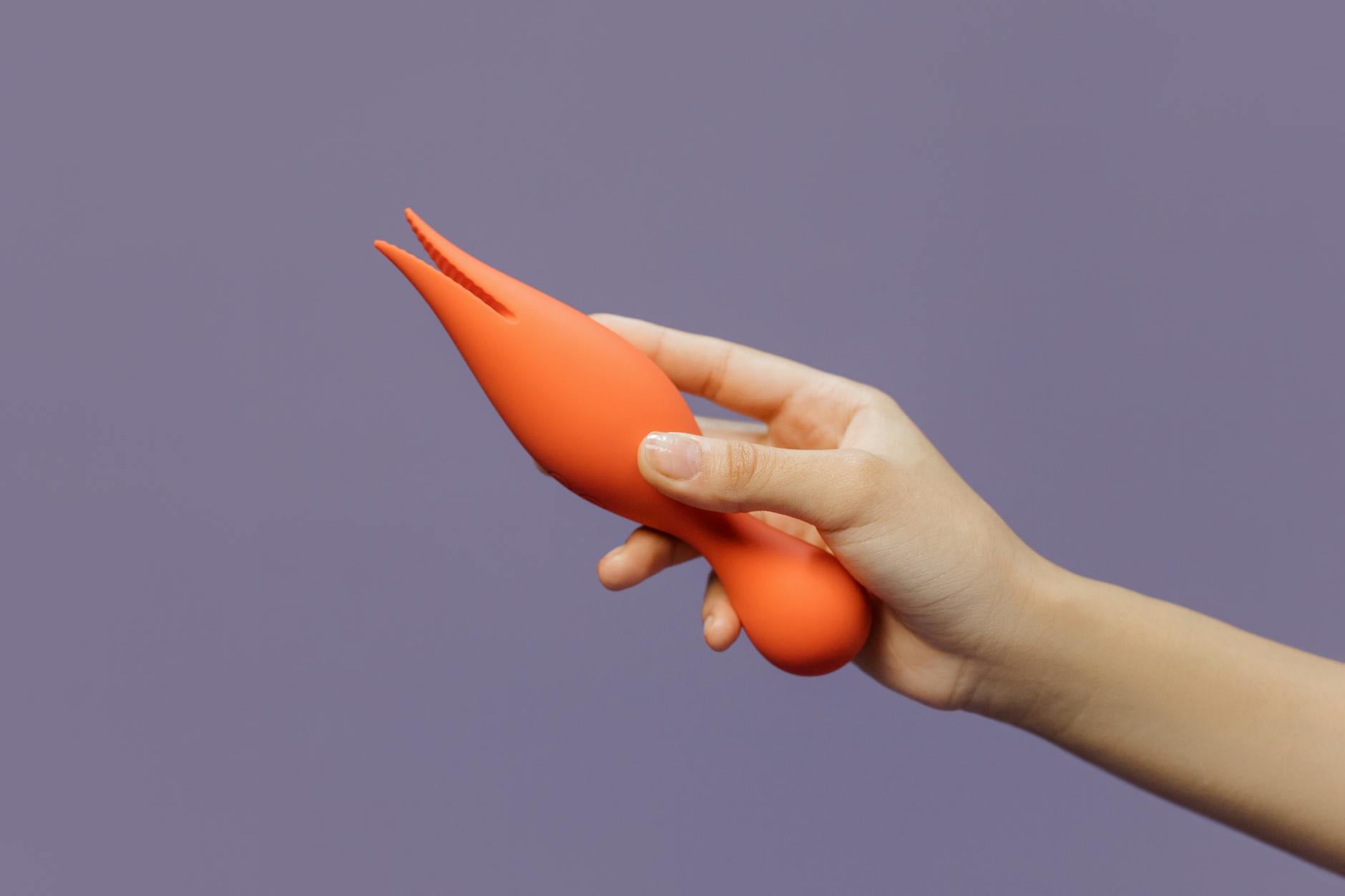
Best Lemon Vibrator Settings for Sensitive Clitoral Tissue
Not every clitoral vibrator works the same way on every body. Here's exactly how to dial in your lemon vibrator for maximum sensation without overstimulation.
Your clitoral tissue responds differently than your partner's, differently than it did last month, differently depending on where you are in your cycle. This isn't a flaw. It's biology. The clitoris has 8,000 nerve endings crammed into a space the size of a pea, which means sensitivity can swing wildly based on hormones, blood flow, stress, and whether you've used the same toy every day this week.
Most people assume that if a lemon vibrator feels intense on day one, it'll feel the same on day fifteen. Then they get frustrated when suddenly that same setting feels like too much. Here's what's actually happening: your tissue sensitivity is shifting, your arousal baseline is different, or you've habituated to one pattern and need something new.
The fix isn't getting a different toy. It's learning how to read your own body and adjust your lemon vibrator's settings strategically.
Sensitivity and overstimulation are not the same thing. Sensitive tissue can experience intense, amazing sensations. Overstimulated tissue goes numb. One builds pleasure. The other kills it.
When you use the same pattern at the same intensity for too long, your nerve endings adapt. They stop firing. That's habituation, and it's the reason people end up cranking intensity higher and higher, chasing the sensation they felt five minutes ago.
With a lemon clitoral vibrator, the solution is pattern rotation, not power escalation. The Lem's different settings exist specifically because rhythm variation triggers more nerve activity than raw intensity. Your clitoris responds to novelty.
If you're new to lemon vibrators or haven't used yours in a while, begin at patterns 1 through 3. These are the gentler rhythms, and they're where I see people experience their most consistent pleasure. Why? Because lower patterns create micro-stimulation that lets you feel the full texture of the sensation without the numbing effect that high intensity can create on very reactive tissue.
Pattern 1 is steady pulse. It's meditative. Use it for the first 3 to 5 minutes of any session to warm up your tissue and build baseline arousal. Your clitoris needs time to engorge. Blood flow matters. Rushing straight to pattern 8 before arousal is actually present is like trying to sprint before you've warmed up.
This is where most people get stuck: they expect immediate intensity, don't get it, and switch tools. Patience here compounds. I routinely have clients report that their best orgasms came after spending five uninterrupted minutes on pattern 1.
Once your tissue is responding and you feel arousal building, patterns 3 through 5 are the working zone for most people with sensitive tissue. Pattern 4 especially is where a lot of users live. It has rhythm variation without aggression. It's specific enough to feel intentional, rhythmic enough to build momentum.
These patterns work because they mimic natural stimulation patterns better than flat intensity. Your partner's fingers naturally create rhythm and variation. A lemon vibrator's patterned settings do something similar, and that variation actually allows your nerve endings to stay engaged longer without fatigue.
If you're someone who numbs easily, pattern 3 or 4 is your baseline. You can stay here for 10 to 15 minutes and still feel sensation crescendoing, rather than plateauing.
Higher patterns (6 through 8) are not better or stronger in any absolute sense. They're just different. Higher patterns have faster rhythm or more intense pulses, and they work best in short bursts when you're already deeply aroused.
Think of them as the final chapter of a session, not the whole story. Use pattern 6 for 2 to 3 minutes once you're already at the edge. The novelty of the shift in rhythm can push you over. But starting here, or staying here for 20 minutes? That's the path to numbing.
For people with very sensitive clitoral tissue, higher patterns might actually feel like too much, period. That's fine. You don't need them. Some of Hello Nancy's most loyal users live entirely in patterns 3 and 4 and have incredible orgasms. The lemon vibrator isn't a ladder where higher settings are the goal.
Here's something most people don't think about: how you position the lemon clitoral vibrator changes everything. Direct contact with the clitoral head is intense. Stimulating around the sides or using the tool over the clitoral hood (the tissue covering the clitoris) is gentler and often feels better for reactive tissue.
If pattern 4 feels overwhelming when you're making direct contact, try the same pattern with the vibrator angled so you're hitting the sides of the clitoral body instead of the tip. Or cover the area with a thin fabric. That single adjustment can make a pattern that felt too intense feel perfect.
This is especially important for people rebuilding sensation after stopping hormonal birth control or dealing with shifts in sensitivity. Your clitoris hasn't forgotten how to feel. It just might need different positioning while it recalibrates.
If you only remember one thing from this: rhythm matters more than intensity for sustainable pleasure. A patterned lemon vibrator at pattern 3 will give you better, longer-lasting sensation than a traditional vibrator buzzing at maximum power. Why? Because pattern variation keeps your nerve endings firing. Flat intensity is boring to your nervous system. Rhythm is engaging.
This is backed up in what we see with clitoral suction devices like the Lem. They work at a consistent suction level, but the rhythmic variation in how that suction is applied creates far more intense and sustained orgasms than many people experience with traditional vibrators, even on high intensity.
Your clitoris craves novelty. Give it that through pattern rotation and positioning variation, and you'll spend less time fighting numbing and more time actually enjoying yourself.
Here's a template I recommend for people managing clitoral sensitivity: Start with pattern 1 for 3 to 5 minutes. Move to pattern 3 or 4 for 8 to 12 minutes. If you want to experiment with a higher pattern, use it for 2 to 3 minutes at the end. Then stop. You don't have to finish. Sometimes the best sessions are exploratory. Sometimes finishing is the goal. Let your body decide.
If you notice numbing happening at any point, stop. Take a 5 to 10 minute break. Your nerve endings need to reset. This isn't failure. It's information. It's your clitoris telling you that you've reached the edge of stimulation it wants right now. Respect that.
Water-based lubricant is your ally here. Even if you have plenty of natural lubrication, adding a small amount of external lube reduces friction and changes how the vibrator feels against your tissue. For sensitive clitorises, this often makes higher patterns feel manageable or lower patterns feel even more refined.
Lube also lets you experiment with gentler touch. Without it, lighter contact can feel almost ticklish. With it, lighter contact becomes precisely calibrated stimulation. Test this out. Start at pattern 2 without lube. Then add lube and stay at pattern 2. The sensation shifts. Your tissue is more comfortable, and the signal from the vibrator is cleaner.
Dehydration dulls sensation. If you've been stressed, skipping water, or running on caffeine, your clitoral tissue feels less responsive. This is why some people think they're numbing to their lemon vibrator when they're actually just dehydrated. Drink water before a session. You'll notice the difference.
Timing in your cycle also shifts sensitivity. Most people feel most responsive in the days right after their period and around ovulation. Days before your period, your clitoris might feel less reactive. This isn't a permanent change. It's cyclical. Plan sessions when you know you're likely to be more responsive, and give yourself grace on days when sensation is lower. You're not broken. You're human.
No. Numbness on high patterns is normal, especially if you're using the same pattern for 20+ minutes. Your nerve endings are adapting to the stimulus. The fix is pattern rotation, breaks, or moving to lower patterns. If you notice numbness happening even at pattern 3, you might be fatigued. Take a day off and try again tomorrow. Clitoral tissue needs rest.
No. This is a common fear and it's not supported by evidence. What happens is temporary habituation to a specific pattern or intensity. Stop using that pattern or tool for a few days, and sensation returns. Your clitoris isn't permanently altered. Your nervous system just adapted to a repetitive stimulus, which is its job.
Start low and slow. Pattern 1 or 2, combined with lubricant and plenty of warm-up time. Why lemon vibrators feel different for people with low libido from PCOS often comes down to sensation threshold and arousal speed. Lower patterns give your nervous system time to engage without overwhelming it. Once arousal is present, move up to patterns 3 through 5.
Yes and no. Objectively, there's no wrong setting. Subjectively, there are settings that work better for your body on any given day. If a setting doesn't feel good, it's wrong for that moment. Full stop. Your body gets to say no. That's the whole point of having options.
You feel numbness, the sensation plateaus instead of building, or you stop feeling anything but pressure. When that happens, dial down immediately. Chasing sensation by cranking intensity higher is the opposite of what actually works. Lowering intensity or switching patterns reactivates your nerve endings. Try it.
Absolutely, but know that your partner's tissue sensitivity might be completely different. Have them start on lower patterns and discover their own sweet spot. What feels perfect for you might feel overwhelming for them. Sensitivity isn't universal. Make space for that difference.
Sensitive clitoral tissue isn't a limitation. It's feedback. When you learn to read that feedback and adjust your lemon vibrator settings accordingly, pleasure gets better, not worse. The nervous system responds to novelty, rhythm, and appropriate intensity. Pattern rotation with a lemon clitoral vibrator gives you all three. Start low. Pay attention. Let your body guide you. That's the whole thing.
If you're still figuring out how a lemon vibrator fits into your pleasure routine, reach out. We're here for the real questions.